
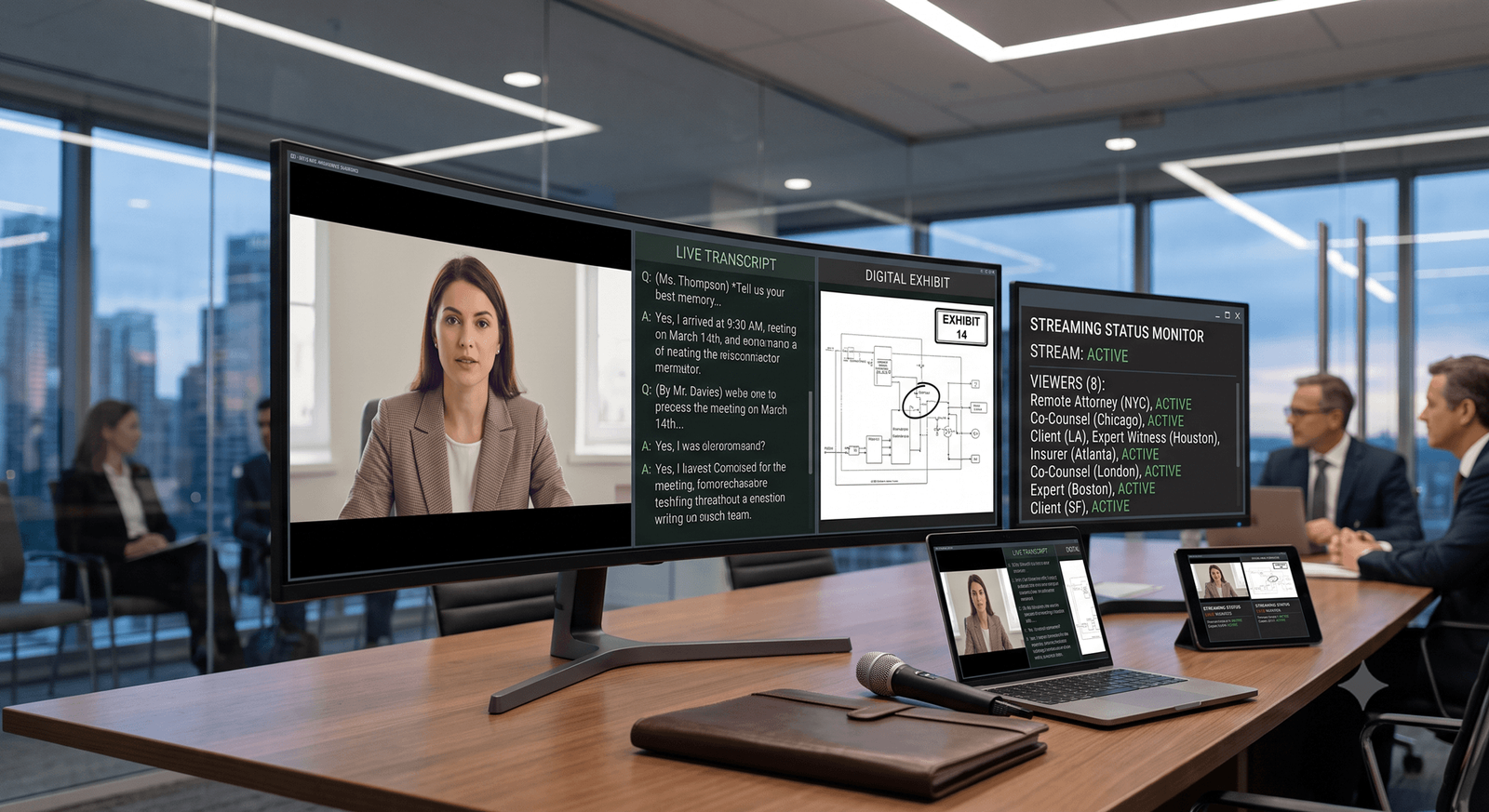
Deposition streaming lets people who are not in the room watch and follow a deposition live, from anywhere with an internet connection. Instead of waiting for a transcript or a recording after the fact, remote attorneys, clients, experts, and insurers can see the video, hear the audio, and read the transcript as testimony happens.
As remote and hybrid proceedings have become standard, deposition streaming has moved from a convenience to an expectation. Here is what it is, how it works, and how to do it securely.
How Deposition Streaming Works
A court reporter and the questioning attorney run the deposition as usual, in a room or remotely. A litigation-grade platform captures the video, audio, and realtime transcript and streams them to invited participants over a secure connection. Those participants join from a laptop, tablet, or phone and watch in real time, often reading the live transcript alongside the video.
Unlike a consumer video call, a purpose-built online deposition platform keeps the stream organized around the record: exhibits, transcript, and video stay in sync, and access is controlled so only invited parties can view.
What You Can Stream
A full deposition stream usually includes several synchronized feeds: video of the witness and participants, audio of the testimony, the realtime transcript as the reporter writes it, and exhibits as they are introduced and marked. Streaming all of these together, rather than just a video call, is what separates a professional deposition stream from a basic web meeting.
Deposition Streaming vs. Realtime Court Reporting
These two terms are related but not the same. Realtime court reporting refers specifically to the live transcript, the reporter's words appearing on screen as they are spoken. Deposition streaming is broader: it delivers the video, audio, transcript, and exhibits of the whole proceeding to remote viewers. Realtime is one of the feeds inside a deposition stream. For a deeper explanation of the transcript side, see our guide on what realtime court reporting is.
Who Watches a Streamed Deposition
Streaming is valuable any time someone needs to follow testimony without being in the room: remote attorneys and co-counsel in other cities, clients who want to observe without traveling, expert witnesses evaluating testimony in real time, and claims professionals or insurers monitoring a case.
Benefits of Streaming a Deposition
Streaming gives your team access from anywhere with no travel, real-time input from remote members and experts, a shared and synchronized record for everyone watching, and lower cost and faster scheduling than gathering in one location.
Security and Access Control
Because a deposition is confidential, streaming has to be controlled. A litigation-grade platform limits the stream to invited participants, encrypts it in transit, and can require a unique code for each attendee. Avoid streaming a deposition over consumer tools, which are not built for the privilege and chain-of-custody requirements of legal testimony.
How to Stream a Deposition
Choose a litigation-grade platform that streams video, audio, realtime transcript, and exhibits together. Send secure invitations to the attorneys, clients, or experts who will watch. Test the connection and audio before the deposition begins. Run the deposition while remote participants watch and read the live transcript. Save the recording and transcript for the record afterward.
Frequently Asked Questions
Is deposition streaming the same as recording a deposition? No. Streaming delivers the proceeding live to remote viewers as it happens, while recording captures it for playback later. Most platforms do both.
Can remote attorneys interact during a streamed deposition? Yes. Counsel who join the stream can question the witness, make objections on the record, and confer privately with their team, depending on their role in the proceeding.
Is deposition streaming secure? It is when you use a litigation-grade platform with encryption and controlled, invitation-only access. Consumer video tools are not appropriate for confidential testimony.
Do viewers need to install software? Not with a modern platform. Invited participants can usually watch from a standard web browser on a computer or mobile device.
LiveLitigation streams secure video, realtime transcripts, and electronic exhibits together so your whole team can follow a deposition live from anywhere. Request a demo to see deposition streaming in action.